Sleep better by improving your home environment
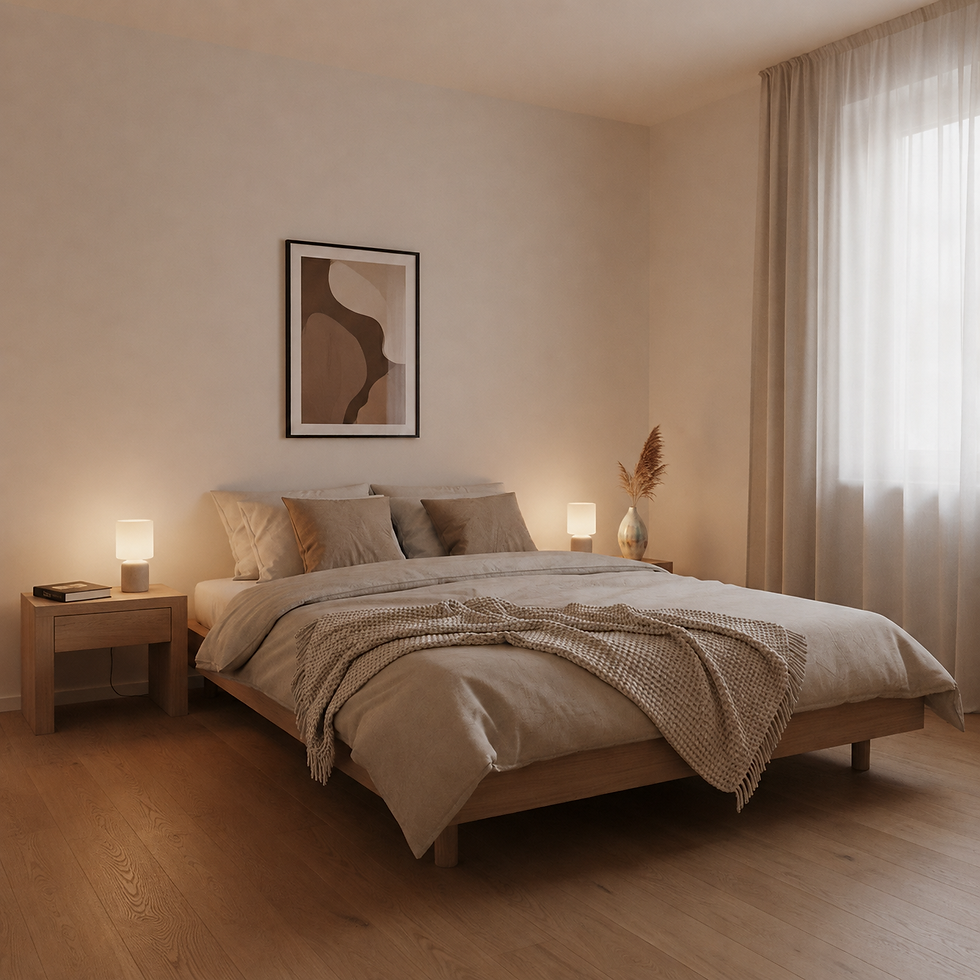
Your bedroom should support deep sleep, recovery and daytime energy.
Modern bedrooms often combine bright evening lighting with wireless devices and electrical sources that remain active throughout the night. A closer look at the sleeping environment can reveal where simple changes may make the room calmer and more supportive of rest.

The visit covers four areas: wireless and radiofrequency sources, electric fields, magnetic fields and evening light. Measurements are taken around the bed and nearby walls, sockets, lamps, chargers and devices.
Where practical, simple changes are tested during the visit to see what has a measurable effect and which improvements are worth prioritising.
Sleep Environment Audit
A measurement-based assessment of the room where you spend the longest continuous part of your day.
What I Assess
01
Wireless / Radiofrequency
I check common wireless sources in and around the bedroom, including Wi-Fi, phones, smart watches, Bluetooth devices, routers, repeaters and other wireless equipment.
02
Electric Fields
I measure electric fields around the bed, especially near the pillow area, bedside tables, lamps, sockets, chargers, extension leads and nearby walls.
03
Magnetic Fields
I check for magnetic fields from wiring, appliances, chargers, power supplies, fuse boxes, underfloor heating, transformers or other nearby sources.
04
Light Spectrum
I assess the light you use in the evening and at night. I check brightness, colour temperature, blue-light content and whether the lighting supports a natural transition towards sleep.
SLEEP ENVIRONMENT ASSESSMENT
Creating a Sanctuary for Restorative Sleep
Your bedroom should provide a calm environment for sleep and recovery. During the assessment, I look at the light, wireless sources, electric fields and magnetic fields around the sleeping area.
The aim is to understand what is present in the room and identify practical changes that suit your home and routine

The Process
The visit combines measurement, simple intervention tests and practical discussion.
Recommendations are explained as we work through the room, so you can see which changes are relevant and why.
Measure
I measure the sleeping area and identify the main wireless, electrical, magnetic and lighting sources.
Test
Where possible, we try simple changes during the visit, such as moving devices, unplugging chargers, changing lighting or switching off selected sources.
Prioritise
We identify the changes most likely to improve the room, starting with practical and low-cost adjustments.
Beyond the Bedroom
Living rooms, home offices and shared spaces can also contain routers, screens, chargers, lighting and other sources used for many hours each day.
These areas can be assessed where relevant, particularly if you work from home, spend long periods near electrical equipment or want to understand how wireless and lighting conditions vary across the home.
The review can include device placement, router and repeater locations, charging setups, electric and magnetic fields around desks and seating areas, and evening lighting in shared spaces.
.png)
.png)
.png)
Wireless Environment Check
Review router location, Wi-Fi scheduling, network settings, mesh systems, repeaters and other practical configuration options.
Office Environment Check
Assessment of rooms where you spend many hours near routers, screens, chargers, lighting and electrical equipment.
Children's Bedroom Assessment
A focused assessment of the child’s sleeping area, including wireless devices, lighting, chargers and electric and magnetic fields around the bed.